
A diaphragm is a flexible sealing component used to separate two areas within a mechanical or fluid system. Typically made from elastomeric materials like rubber, diaphragms are designed to flex while maintaining a secure seal between system chambers.
The Rubber Group specializes in custom-engineered rubber and fabric-reinforced diaphragms that provide precise, consistent performance in demanding fluid control, sensing, and actuation applications. Keep reading to learn more and contact us for a quote.
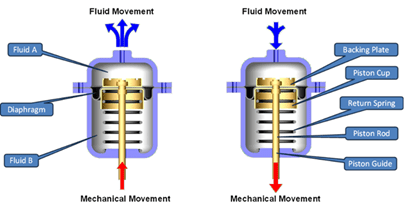
What Does a Diaphragm Do?
Diaphragms operate by flexing in response to pressure changes within a system. This movement allows them to convert pressure variations into controlled mechanical motion while maintaining a reliable seal between system areas.
Because of this capability, diaphragms are used widely in industrial and mechanical systems where controlled movement, pressure regulation, or fluid isolation are required. Common applications include pumps, valves, regulators, actuators, and other fluid handling equipment.
In these systems, diaphragms perform several key functions:
- Regulating pressure and controlling flow
- Isolating fluids or gases within a system
- Allowing mechanical movement without leakage
- Maintaining a reliable seal during repeated operating cycles
Rubber Diaphragms and Reinforcements
For applications that have standard operating environments, diaphragms are typically made of rubber without any additional reinforcements. For applications that require greater durability and performance, diaphragms may incorporate reinforcement materials.
Fabric-reinforced diaphragms are engineered to handle more demanding conditions than standard rubber diaphragms. By integrating reinforcement layers, these components gain increased tensile strength, improved dimensional stability, and greater resistance to fatigue during repeated flexing.
Why Material Selection Matters
Selecting the right diaphragm materials is essential for reliable performance and long service life. Diaphragm performance depends on the interaction of rubber chemistry, reinforcement design, and part geometry.
Diaphragms often operate in demanding environments where they are exposed to constant pressure cycling, temperature variations, and contact with fluids or gases. Their materials of construction must maintain flexibility while resisting degradation from application conditions.
Choosing the wrong diaphragm material can lead to issues such as cracking, swelling, loss of elasticity, or premature failure. Material selection also directly impacts key performance characteristics such as chemical resistance, temperature tolerance, permeability, and fatigue life.
For reinforced diaphragms, the relationship between the elastomer and the fabric layer plays a significant role. The reinforcement must provide strength and dimensional stability without restricting the diaphragm’s ability to flex. Proper bonding between layers is essential to prevent delamination and ensure long-term durability.
Ask The Rubber Group for Diaphragms
Are you designing a fluid control system or evaluating diaphragm materials? At The Rubber Group, our engineering team works closely with customers to help evaluate operating conditions, recommend appropriate material combinations, and develop diaphragm solutions tailored to the application.
Contact us to learn more about custom diaphragm manufacturing at The Rubber Group.